This week I found another rabbit hole: creating 3-D models via the blender-mcp server. It allows us to connect any LLM client and create 3-D objects via prompts. I was curious how local large language models would perform this task.
Steps I followed
- Downloaded blender from the official website and installed it
- Opened blenders preferences and checked if there was an add-on called MCP they shouldn’t be one Google search for blender-MCP and you will find an MCP installation walk-through in blenders lab website.
- Download the add-on which allows to communicate with blender
- Cloned the llama.cpp repository from GitHub and built it locally
- Downloaded Qwen 3.6 35B model converted by Unsloth to GGUF format
- Downloaded the official MCP server from GitHub and ran it using a UV
- Ran the llama.cpp server and connected the blender MCP from the UI blender MCP was running at local host port 9191
- Ensured that the add-on in blender was also active. By default it runs at port 9876
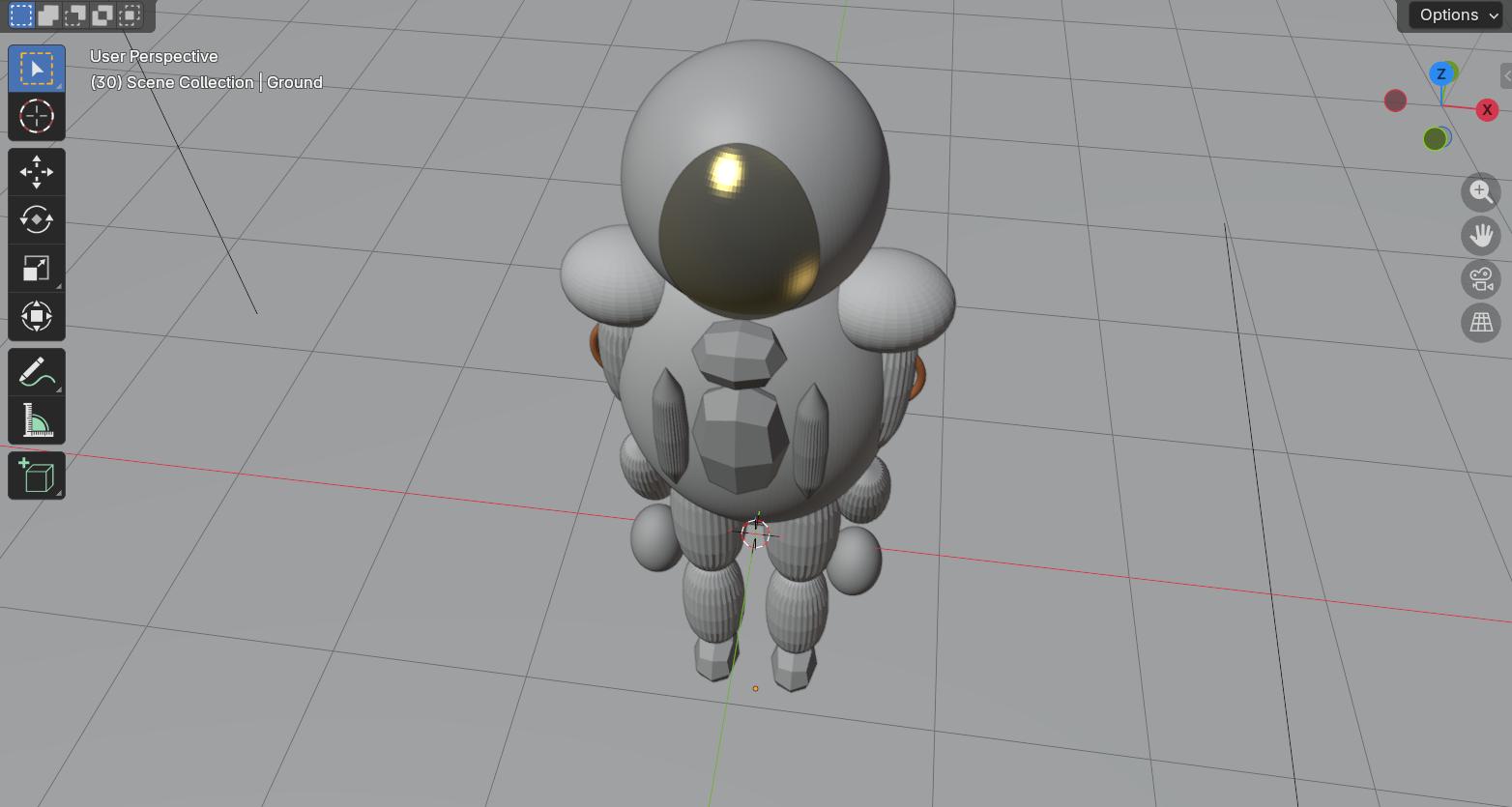
Then I started to prompt to thisQwen 3.6 model and I was surprised how good it was in agentic workflow. In one of the sessions I asked to create a snowman, in the next I asked to create an astronaut by giving it a random image URL of an astronaut. In about 40 minutes it had created a very basic 3-D model.
Results
Here is a screenshot of what it created. We live in amazing times where all of this could be run locally without ever having to worry about any weekly token limits.
My thoughts
This agentic generation took over 40 minutes to create a basic 3-D model! That is not effective enough plainly in terms of an agentic automation task. However, with a better dedicated GPU, this time could definitely be minimized to under 15 or 10 minutes. But that test is for some other time.
I also believe that in about 6 to 8 months time, when we have an open-source model which is as good as Anthropic’s Sonnet 4.6 og OpenAI’s GPT 5.4, we will see significant performance leaps for this specific application.
Will I be using it often? No but it was great fun to play around with this new tech where we could just prompt our way to create 3-D objects.